The United States Department of State has announced visa bans against five individuals, including a former European Union commissioner, accusing them of attempting to coerce American social media companies into suppressing viewpoints they oppose.
In a statement, Marco Rubio said the move targets what he described as “radical activists and weaponized NGOs” that have promoted censorship by foreign governments while targeting American speakers and US-based companies.

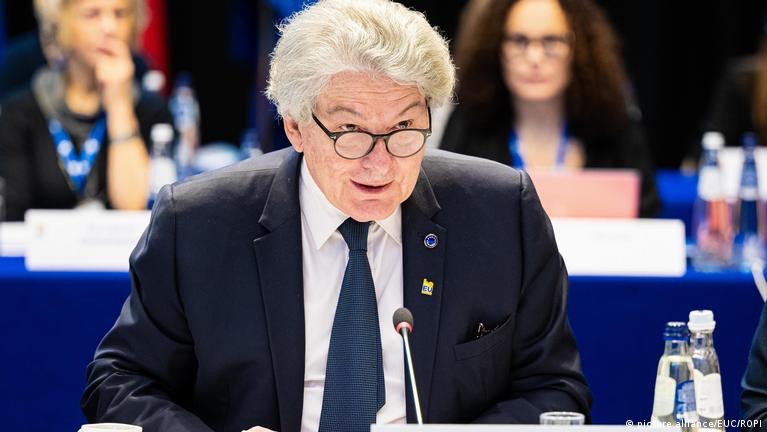
Among those named is Thierry Breton, the former EU commissioner for the internal market. The State Department described Breton as the “mastermind” behind the EU’s Digital Services Act (DSA), legislation that imposes content moderation requirements on major online platforms.
The DSA has drawn sharp criticism from US conservatives, who argue it is being used to censor right-wing speech. European Union officials have rejected that characterization. Breton, who has previously clashed with Elon Musk over compliance with EU rules on X, responded to the visa decision by writing on the platform: “To our American friends: Censorship isn’t where you think it is.”
The European Commission recently fined X €120 million under the DSA, citing its blue tick verification system as “deceptive.” In response, X blocked the Commission from advertising on the platform.
Also facing visa bans is Clare Melford, head of the Global Disinformation Index. US Undersecretary of State Sarah B Rogers accused the group of using US taxpayer funds to promote censorship and blacklist American media. GDI rejected the claim, calling the sanctions “an authoritarian attack on free speech.”
Another individual named is Imran Ahmed, founder of the Center for Countering Digital Hate. Rogers accused him of collaborating with the Biden administration to “weaponize” government against US citizens. CCDH has not yet publicly responded.
Two German activists, Anna-Lena von Hodenberg and Josephine Ballon, co-CEOs of HateAid, were also included. They described the decision as “an act of repression” and said they would not be intimidated.
Rubio said the visa restrictions are part of a broader effort against what he called the “global censorship-industrial complex,” adding that Donald Trump’s America First policy rejects what he described as foreign overreach that targets American speech and sovereignty.