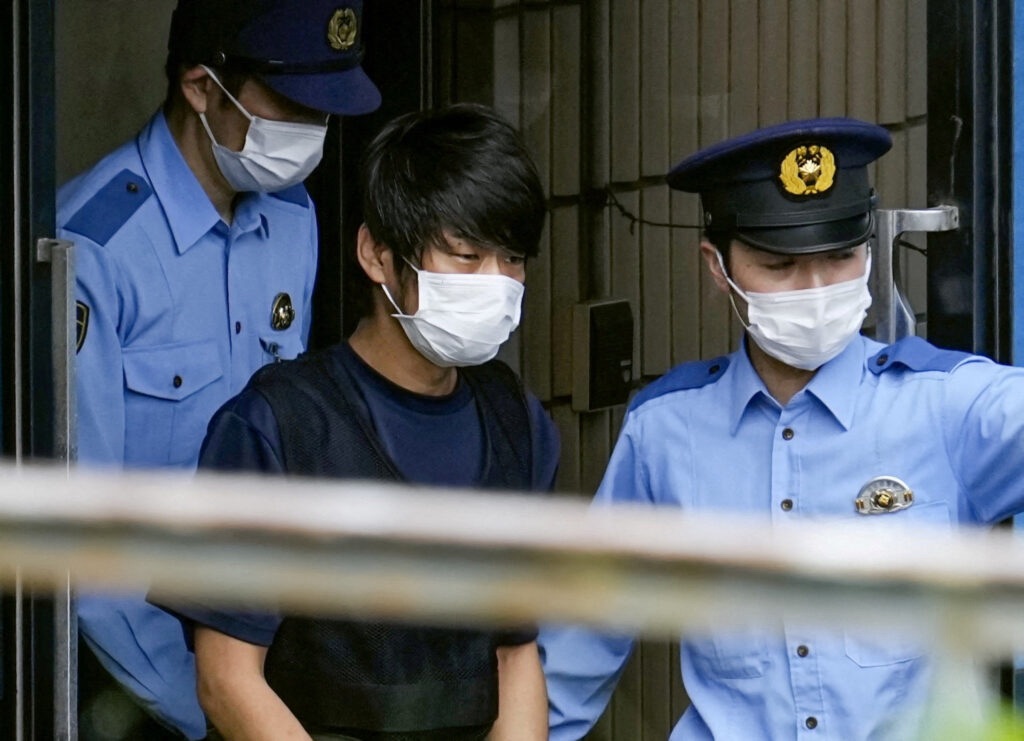
The man who fatally shot former Japanese prime minister Shinzo Abe has been found guilty and sentenced to life imprisonment, more than three years after the assassination stunned Japan and exposed political ties to the Unification Church.
The Nara District Court on Wednesday convicted 45-year-old Tetsuya Yamagami of murder and firearms violations over the July 2022 killing of Abe, Japan’s longest-serving leader, who was shot from behind with a handmade gun while delivering a campaign speech.
Judge Shinichi Tanaka said Yamagami was “determined” to kill Abe and described the daylight attack as “despicable and extremely malicious,” noting that Abe was shot when he least expected it. Prosecutors had sought a life sentence, citing the unprecedented nature of the crime and its severe impact on society.
Yamagami appeared subdued as the verdict was read. His defence team, which admitted his guilt at the start of the trial, said it had not yet decided whether to appeal.
The court heard that Yamagami’s motive was driven by resentment toward the Unification Church, blaming it for bankrupting his family through his mother’s donations, estimated at around 100 million yen. He believed prominent politicians, including Abe, helped the church thrive. Abe had appeared at events linked to church-affiliated groups.
Judge Tanaka acknowledged that Yamagami’s upbringing and family circumstances influenced his mindset but stressed that the assassination was the result of his own decisions and deserved strong condemnation.
The trial renewed scrutiny of the Unification Church’s links to Japan’s ruling Liberal Democratic Party, revelations that led to multiple ministerial resignations after Abe’s death. The killing also triggered national soul-searching in a country with strict gun laws and rare incidents of gun violence, alongside admissions of security failures on the day of the attack.
Under Japan’s legal system, a life sentence allows for the possibility of parole, though most inmates remain incarcerated for life.