




The captain of Iran’s women’s national football team, Zahra Ghanbari, has withdrawn her request for asylum in Australia, becoming the fifth member of the delegation to reverse an earlier decision to defect.
According to Iranian state news agency IRNA, Ghanbari will return to Iran from Malaysia. Australian officials confirmed that another member of the group also withdrew an asylum application but did not publicly identify the individual.
The footballers initially sought protection after concerns they could face punishment in Iran for remaining silent during the national anthem at their opening Women’s Asian Cup match.
With the latest withdrawal, only two of the seven team members who initially accepted Australia’s humanitarian visa offer remain in the country.
Human rights advocates claim the players may have faced pressure to abandon their asylum bids. Shiva Amini, a former Iranian national futsal player now living in exile, said families of the athletes in Iran were reportedly threatened.
According to Amini, Iran’s Football Federation, working alongside the Islamic Revolutionary Guard Corps (IRGC), applied “intense and systemic pressure” on the players’ relatives, leading some to return.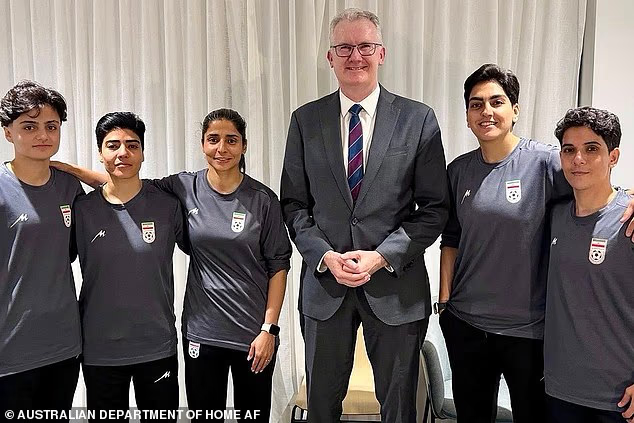
Iranian state media praised Ghanbari’s decision. IRNA described her move as “returning to the embrace of the homeland,” while the semi-official Mehr news agency labeled it a “patriotic decision.”
Three other team members who had earlier applied for asylum also withdrew their claims. Human rights activists identified them as Zahra Soltan Meshkehkar, Mona Hamoudi, and Zahra Sarbali.
Australia’s Home Affairs Minister Tony Burke said the government had provided the athletes with a genuine opportunity to remain safely in the country.
“Australians should be proud that these women were given real choices and support while interacting with authorities seeking to help them,” Burke said in a statement.
However, he acknowledged the difficult circumstances surrounding the decisions.
“We cannot remove the broader context in which these incredibly difficult decisions are being made,” he added.
Iran’s sports ministry claimed the team’s “national spirit and patriotism” had defeated what it called attempts by foreign governments to exploit the situation.
IRGC-linked news agency Tasnim reported that the players were traveling to Kuala Lumpur, Malaysia, to reunite with the rest of the squad before returning to Iran.
Australian minister Kristy McBain dismissed Iranian statements as propaganda and said the government had ensured the athletes were free to make their own choices.
Concerns for the players first arose when the Iranian team refused to sing the national anthem during their Asian Cup opening match against South Korea on March 2. The act sparked backlash in Iran, where some commentators labeled the players “wartime traitors” and called for harsh punishment.
The team sang the anthem in their remaining matches before being eliminated from the tournament, leading critics to speculate that government officials accompanying the team had pressured them to comply.
The rest of the Iranian squad left Australia on March 10, two days after their elimination from the Women’s Asian Cup.
Discover more from Niyi Daram
Subscribe to get the latest posts sent to your email.
