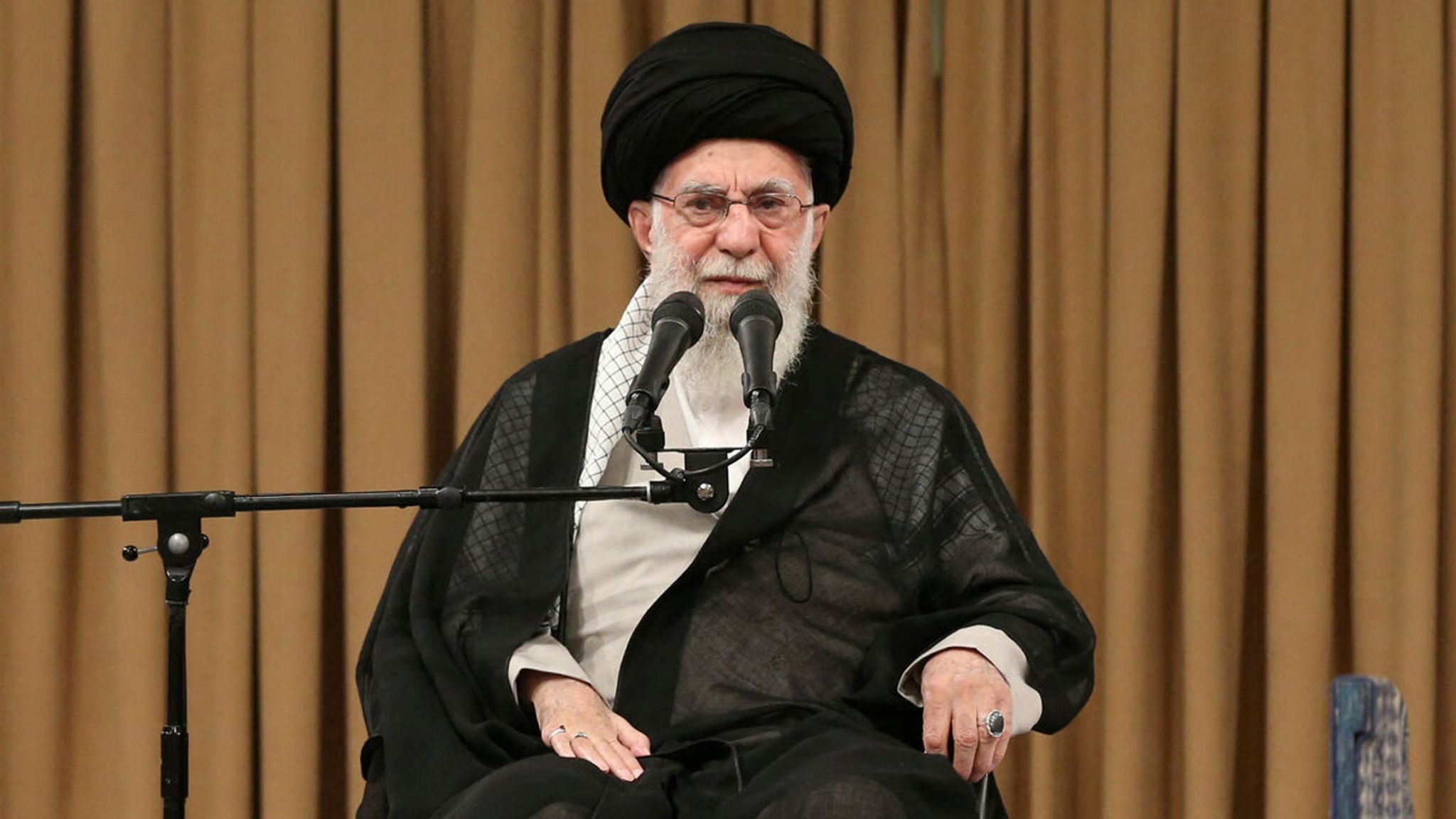
Ayatollah Ali Khamenei, 86, has served as Iran’s supreme leader since 1989. He holds ultimate authority over the state, the military and the direction of the Islamic Republic.
Early Life and Rise to Power
Born in 1939 in Mashhad to a clerical family, Khamenei received a religious education before becoming involved in opposition to Iran’s monarch, Shah Mohammad Reza Pahlavi, prior to the 1979 revolution.
He was aligned with revolutionary leader Ayatollah Ruhollah Khomeini and rose rapidly after the monarchy was overthrown. Following assassinations of senior officials in the early years of the republic, Khamenei became president in 1981. An earlier assassination attempt left him with a paralysed right arm.
After Khomeini’s death in 1989, Khamenei was appointed supreme leader by the Assembly of Experts.
Structure of His Power
As supreme leader, Khamenei:
- Has final authority over all major state policies
- Serves as commander-in-chief of the armed forces
- Controls the Islamic Revolutionary Guard Corps
- Appoints key judicial, military and state broadcasting officials
- Directly appoints half of the Guardian Council
The Guardian Council vets candidates for presidential and parliamentary elections and reviews legislation for compliance with Islamic law. This structure allows the supreme leader to shape political competition and limit challenges to the system.
Although Iran has an elected president and parliament, ultimate power rests with the supreme leader. Presidents, including current office-holder Masoud Pezeshkian, operate within boundaries set by him.
Regional Influence
Khamenei’s authority extends beyond Iran’s borders through Tehran’s backing of regional groups such as Hamas and Hezbollah. His leadership has shaped Iran’s confrontational stance toward Israel and the United States, as well as its nuclear programme.
Succession and Internal Pressure
The 2024 death of former president Ebrahim Raisi removed a widely viewed potential successor. Attention has since turned to Khamenei’s son, Mojtaba Khamenei, as a possible heir, though no official succession plan has been confirmed.
At home, Khamenei faces economic strain caused in part by sanctions tied to Iran’s nuclear activities. Mass protests in late 2025 and early 2026, driven by economic hardship and political discontent, were met with a violent crackdown by security forces, resulting in thousands of reported deaths according to rights groups.
Current Threat Environment
Following coordinated US and Israeli strikes on Iranian targets, including reported damage near his compound in Tehran, Iranian officials said Khamenei had been moved to a secure location.
The attacks represent one of the most serious external challenges of his 35-year rule, testing both his internal control and regional strategy at a moment of heightened military confrontation.