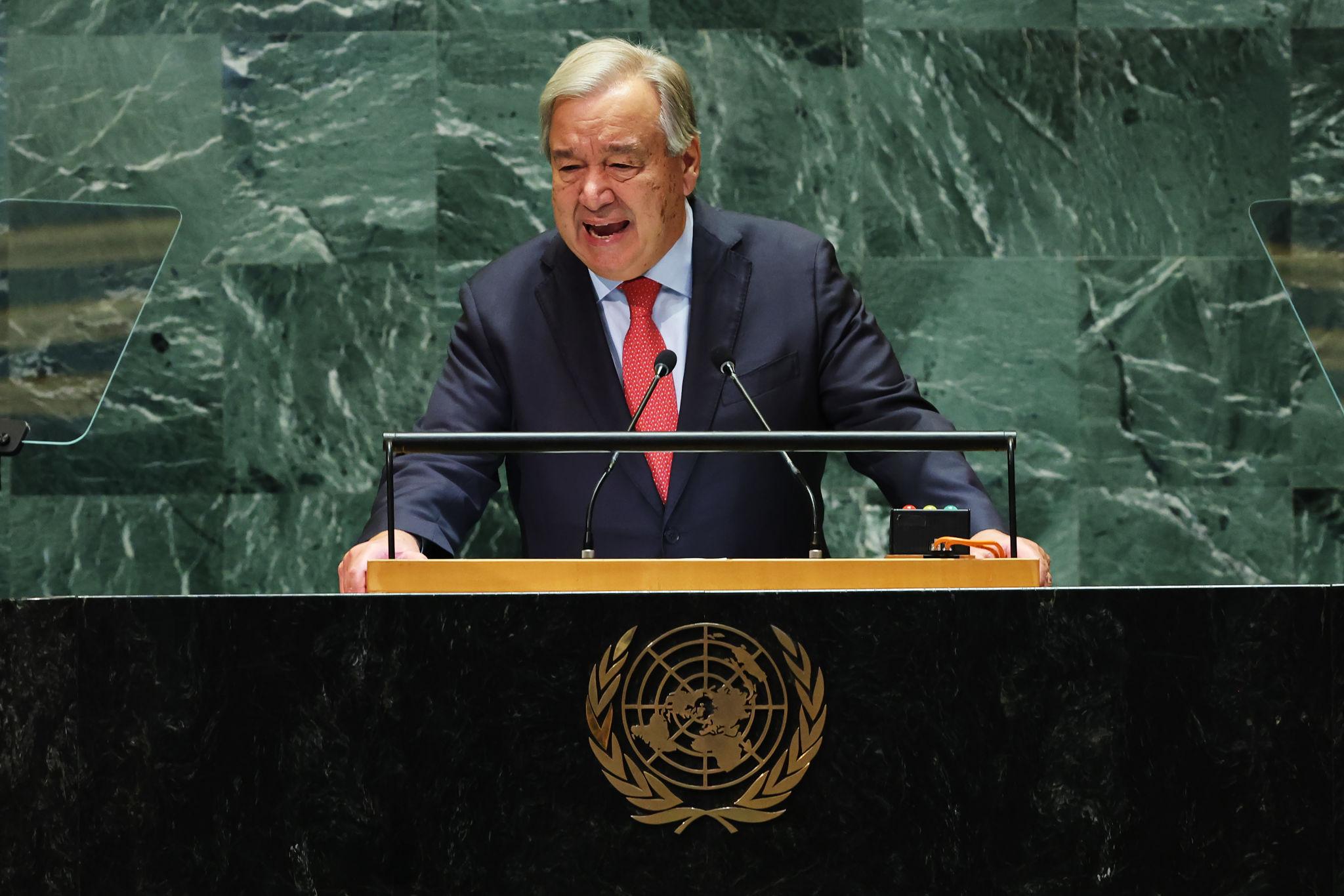
António Guterres has renewed calls for the full decolonisation of Western Sahara and 16 other territories that remain under colonial administration.
Addressing the 2026 session of the UN Special Committee on Decolonisation (C-24), Guterres said the international community must recommit to ending colonial rule more than six decades after the United Nations formally launched its decolonisation agenda.
“This organisation was founded as a forum where nations meet as equals not as rulers and the ruled,” he said, stressing that decolonisation remains central to the UN’s mission.
The committee was established by the UN General Assembly in 1961 following the 1960 Declaration on the Granting of Independence to Colonial Countries and Peoples. Its mandate is to monitor progress toward self-governance under Chapter XI of the UN Charter.
Guterres warned that colonial legacies continue to fuel economic exploitation, inequality, racism and political marginalisation. He called for inclusive dialogue involving non-self-governing territories, administering powers and UN member states, adding that each case must be handled individually in line with existing UN resolutions.
Since 1945, more than 80 former colonies representing around 750 million people have gained independence. However, Western Sahara and 16 other Non-Self-Governing Territories remain on the UN list, with a combined population of nearly two million.
Western Sahara is widely regarded as Africa’s last unresolved decolonisation case. Spain administered the territory until 1976. After its withdrawal, a dispute emerged involving Morocco, Mauritania and Algeria. Today, the Sahrawi Arab Democratic Republic operates a government-in-exile from Tindouf, Algeria, controlling roughly 30% of the territory, while Morocco administers about 70%.
Morocco has indicated interest in resolving the conflict following talks previously brokered by Donald Trump, though the territory’s final status remains disputed.