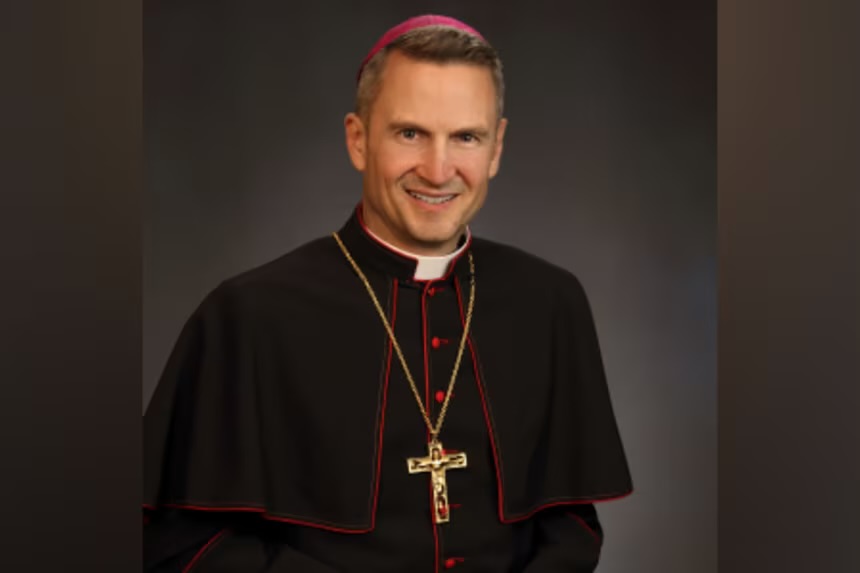
Pope Leo has appointed Bishop Ronald Hicks as the new Archbishop of New York, a move widely seen as signaling a more direct and informed Catholic response to US immigration policy.
Hicks, 58, succeeds Cardinal Timothy Dolan, whose resignation has been accepted after he turned 75, the mandatory retirement age for bishops. The appointment is Pope Leo’s most consequential US church decision since his election, placing Hicks in one of the most influential Catholic roles in the country. Archbishops of New York are traditionally elevated to cardinal, putting Hicks on a national and global stage.
The timing is significant. The Trump administration has intensified anti-immigration measures, prompting unusually strong criticism from US Catholic bishops. Hicks has already aligned himself with that stance, recently expressing solidarity with migrants and backing the bishops’ public opposition to White House policies.
Like Pope Leo, Hicks is from the Chicago area and has extensive experience in Latin America. He previously spent five years in El Salvador working with orphaned and abandoned children and also served in Mexico. His background reflects the growing influence of Hispanic Catholics in the US and mirrors Leo’s own missionary years in Peru.

Hicks replaces Dolan, a highly visible church figure who maintained warmer relations with Donald Trump than Pope Francis did. Dolan led prayers at Trump’s inaugurations and praised the president’s faith, though he also drew controversy for likening assassinated conservative activist Charlie Kirk to Saint Paul.
By contrast, Hicks is viewed as a pastoral moderate and bridge-builder. He opposed efforts to deny communion to former President Joe Biden over abortion policy and is known for working across ideological lines within the church. Commentators describe him as committed to Catholic social teaching, including workers’ rights, economic justice, and protection of the marginalized, without engaging in culture-war politics.
Catholic analysts say Hicks aligns closely with Pope Leo’s approach: balanced, socially engaged, and resistant to polarization. His appointment is also believed to have been supported by Cardinal Blase Cupich of Chicago, a close papal ally involved in Vatican oversight of bishop appointments.
Hicks will also inherit major institutional challenges, including the ongoing fallout from clerical sexual abuse scandals. The Archdiocese of New York has announced a $300 million settlement fund for about 1,300 survivors, to be financed in part through large-scale property sales. Hicks has previously said the church must confront abuse directly and without hesitation.
The new archbishop now steps into a politically charged environment, but observers say his background and temperament position him to navigate both church reform and national controversy.