European leaders have pushed back against U.S. President Donald Trump’s call to join military efforts against Iran, exposing growing divisions across the transatlantic alliance.
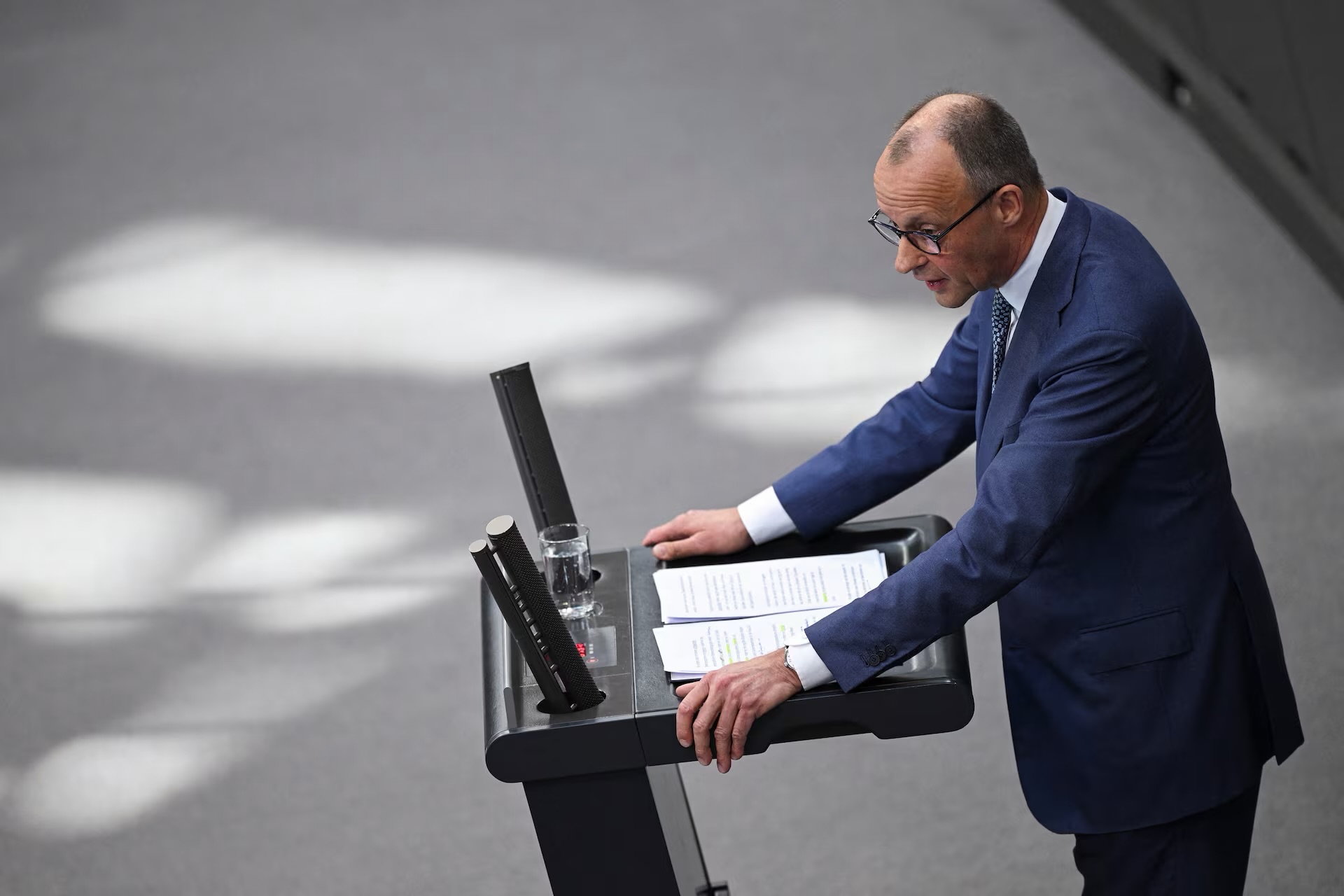
Germany, France and other key allies have declined direct involvement in the conflict, citing a lack of consultation and uncertainty over U.S. objectives. German Chancellor Friedrich Merz said Washington failed to present a clear strategy or seek European input before launching operations.
“There is no convincing plan for how this operation could succeed,” Merz told lawmakers, adding that Germany would not participate in securing the Strait of Hormuz through military means while the war continues.
German Defence Minister Boris Pistorius echoed that position, stating, “This is not our war.” French President Emmanuel Macron similarly emphasized that France is not a party to the conflict.
European governments are weighing the risks of involvement against already strained relations with Washington, which have been tested by disagreements over Ukraine, trade disputes and NATO tensions.
Trump criticized allies for refusing to join the campaign, calling their decision a “very foolish mistake,” and directed sharp remarks at British Prime Minister Keir Starmer. However, European leaders appear backed by public opinion.
Polling shows widespread opposition to the war across Europe. In the UK, 49% oppose the conflict compared to 28% in support. In Germany, 58% oppose it, while in Spain, opposition reaches 68%.
Spain’s government strongly condemned the strikes, with Prime Minister Pedro Sánchez calling them reckless and illegal. Deputy Prime Minister María Jesús Montero rejected U.S. pressure, stating Spain would not accept threats or act as a subordinate.
Despite tensions, European countries are pursuing independent strategies to manage the crisis. The UK is working with partners on plans to secure the Strait of Hormuz, while France is coordinating a potential multinational effort involving European, Asian and Gulf states to protect shipping routes without direct U.S. leadership.
European officials have expressed concern that U.S. war aims remain unclear and may differ from Israel’s objectives, particularly regarding regime change in Iran.
At the same time, frustration has grown over Washington’s unilateral decisions, including easing oil sanctions on Russia to stabilize global prices, which some European leaders say caught them off guard.
European Union foreign policy chief Kaja Kallas said the bloc is adapting to what it sees as unpredictable U.S. leadership, emphasizing the need for calm and strategic focus amid ongoing uncertainty.
The response reflects a broader shift, with Europe seeking to maintain unity while avoiding deeper entanglement in a conflict it neither initiated nor fully supports.