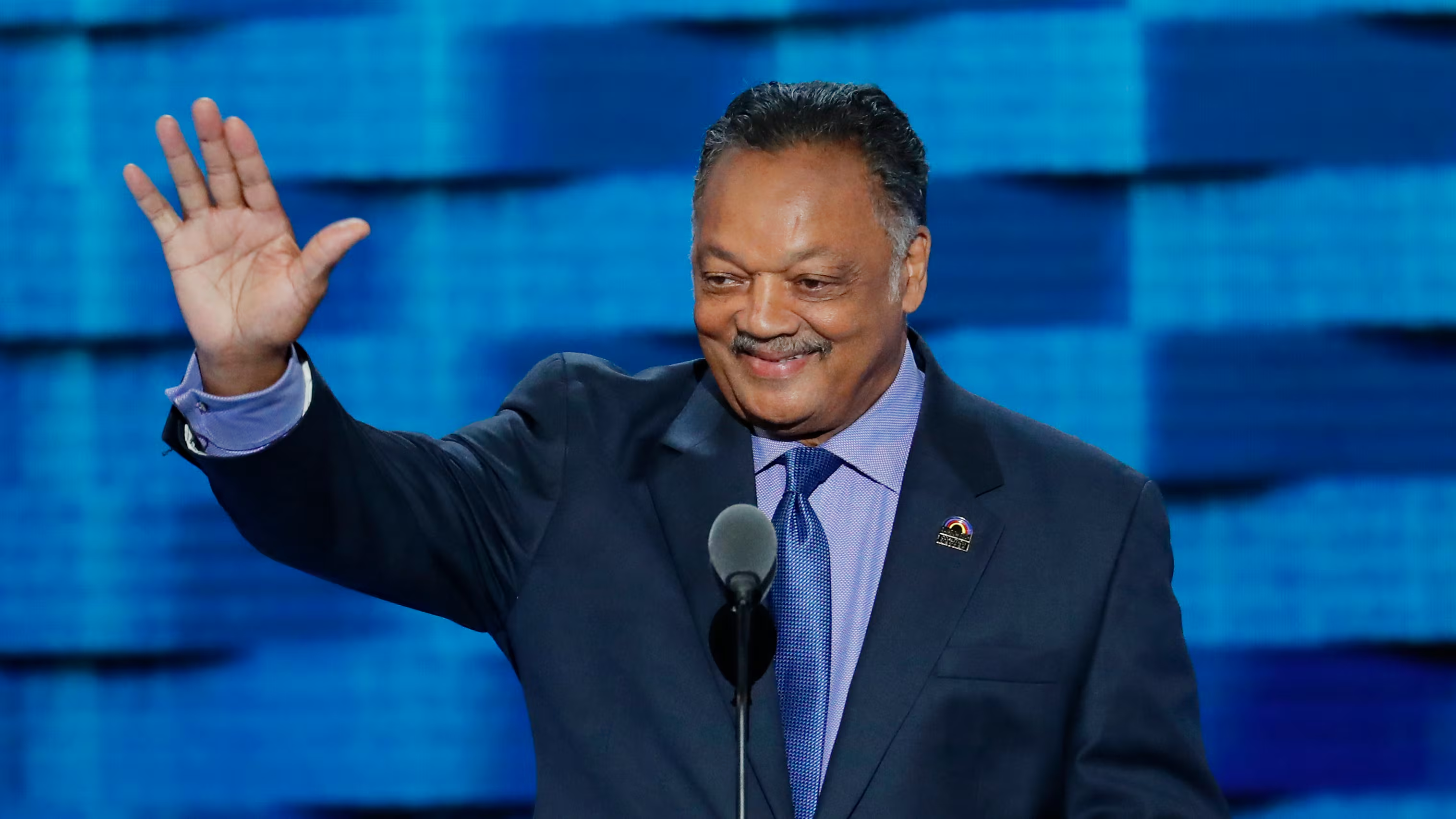
Rev. Jesse Jackson, civil rights leader, Baptist minister and two-time Democratic presidential candidate, has died at 84, his family confirmed on Tuesday, February 17.
In a statement, the family said his lifelong commitment to justice, equality and human rights shaped a global movement for freedom and dignity. Jackson had been hospitalized in recent months and was under observation for progressive supranuclear palsy (PSP), according to the Rainbow PUSH Coalition.

Jackson, Jesse Louis | The Martin Luther King, Jr. Research and Education Institute
A protégé of Martin Luther King Jr., Jackson emerged as a prominent figure in the modern Civil Rights Movement. As a college student, he organized sit-ins against segregation, including a 1960 protest at the Greenville County Public Library in South Carolina that led to the arrest of Jackson and seven other Black students known as the “Greenville Eight.” The action contributed to the eventual integration of the library system.
Jackson later worked closely with King through the Southern Christian Leadership Conference, directing Operation Breadbasket, an initiative focused on improving economic opportunities for Black communities. He was ordained in 1968 after studying at Chicago Theological Seminary.

Civil rights leader Rev. Jesse Jackson
In 1971, he founded PUSH (People United to Save Humanity), which later merged into the Rainbow PUSH Coalition. Through the organization, he championed voter registration, economic justice and corporate accountability.
Jackson launched historic presidential bids in 1984 and 1988. In 1984, he won 18 percent of the Democratic primary vote and carried two states. In 1988, he expanded his support to 29 percent and won 13 states, becoming the first Black candidate to win the nationwide Democratic youth vote. His campaigns reshaped the Democratic Party’s platform and inspired a generation of minority political leaders.
Born Jesse Louis Burns on October 8, 1941, in Greenville, South Carolina, he grew up in poverty during the Jim Crow era. He later adopted the surname of his stepfather, Charles Jackson. A gifted student and athlete, he attended the University of Illinois on a football scholarship before transferring to North Carolina A&T State University, where his activism intensified.
Jackson remained an influential political voice into the 1990s and 2000s. From 1991 to 1997, he served as Washington, D.C.’s unofficial “shadow senator,” advocating for statehood.
Over more than six decades, Jackson’s work left a lasting imprint on American politics and the global struggle for civil rights.