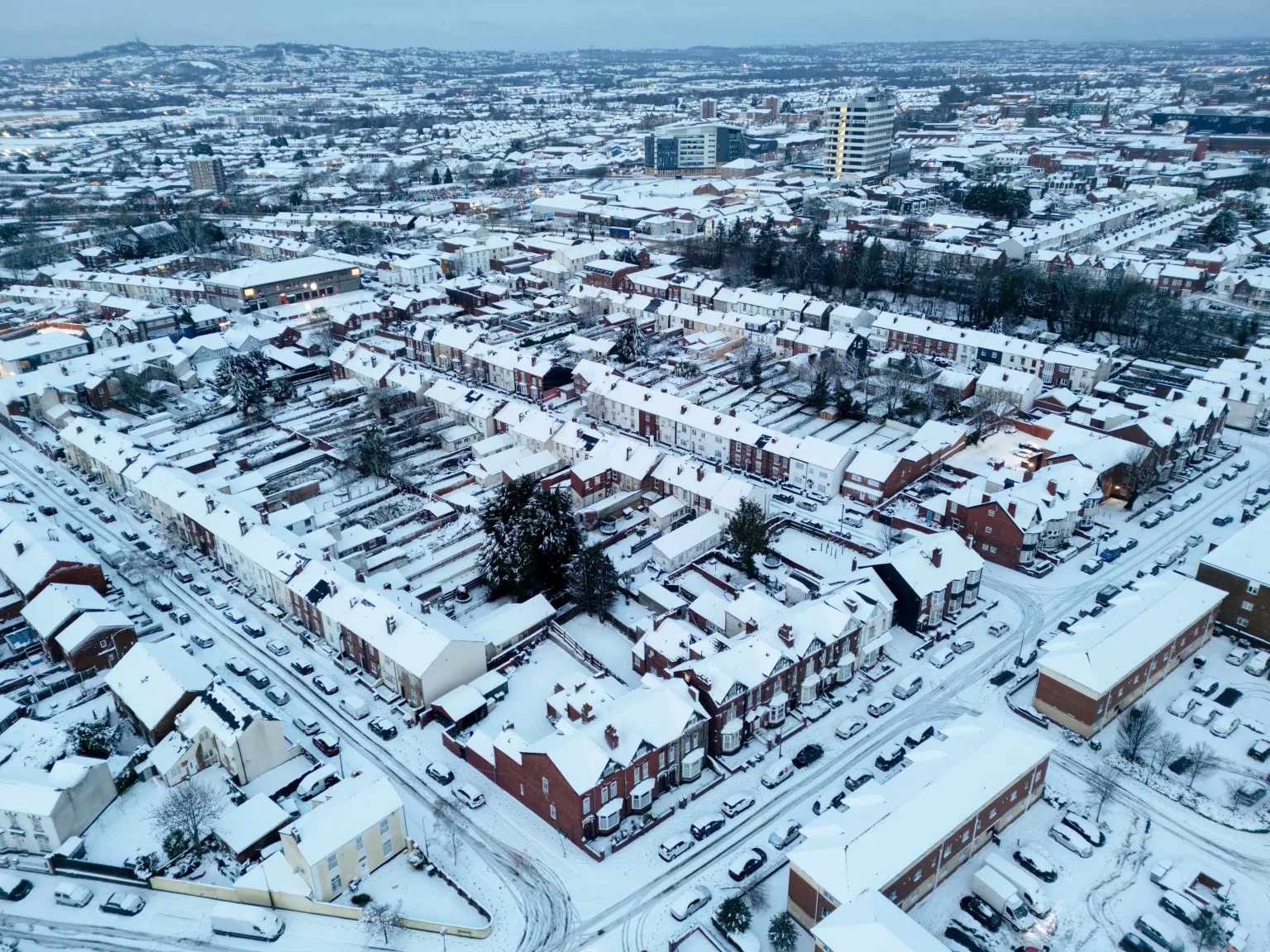
The United Kingdom is facing a growing flood threat as melting snow from Storm Goretti combines with fresh rain and strong winds, prompting more than 100 flood alerts and further disruption across the country.
Storm Goretti, described by forecasters as the worst snowfall in a decade, brought heavy snow, coastal winds reaching 100mph, power outages and major travel shutdowns. At the peak of the storm, more than 64,000 homes were left without electricity, airports suspended operations and rail companies issued do not travel notices.
As temperatures rise and rainfall moves in, the Environment Agency has issued 106 flood alerts and 12 flood warnings across England, while the Scottish Environment Protection Agency warned that thawing snow could flood low lying land, roads and homes. Flooding has already been reported in parts of East Sussex. Yellow and amber Met Office warnings for snow, ice, wind and rain remain in place across wide areas.

The storm’s impact has been felt nationwide. Snow and fallen trees blocked roads in the Midlands, South West and Wales, while schools in Cornwall, Wales and Scotland were forced to close. Temperatures fell to minus 13.3 degrees Celsius in Aberdeenshire, with forecasters warning of more ice and wintry showers.
Air travel was heavily affected, with runways temporarily closed at East Midlands and Birmingham airports and dozens of flights cancelled at Heathrow. Rail services across England, Scotland and Wales are running reduced timetables because of blocked lines and safety concerns.
Drivers have been told to avoid unnecessary journeys, with National Highways warning of delays and urging people to check conditions before travelling.
Political pressure is building on the government to call an emergency COBRA meeting to coordinate the response, especially as regions such as the South West remain badly affected.
The Met Office said Storm Goretti is a multi hazard event, with snow, rain, wind and ice creating overlapping risks. Further widespread rain is expected on Sunday, with more snow on higher ground in Wales, the Midlands and northern England. Disruption is expected to continue into next week as conditions remain unstable.