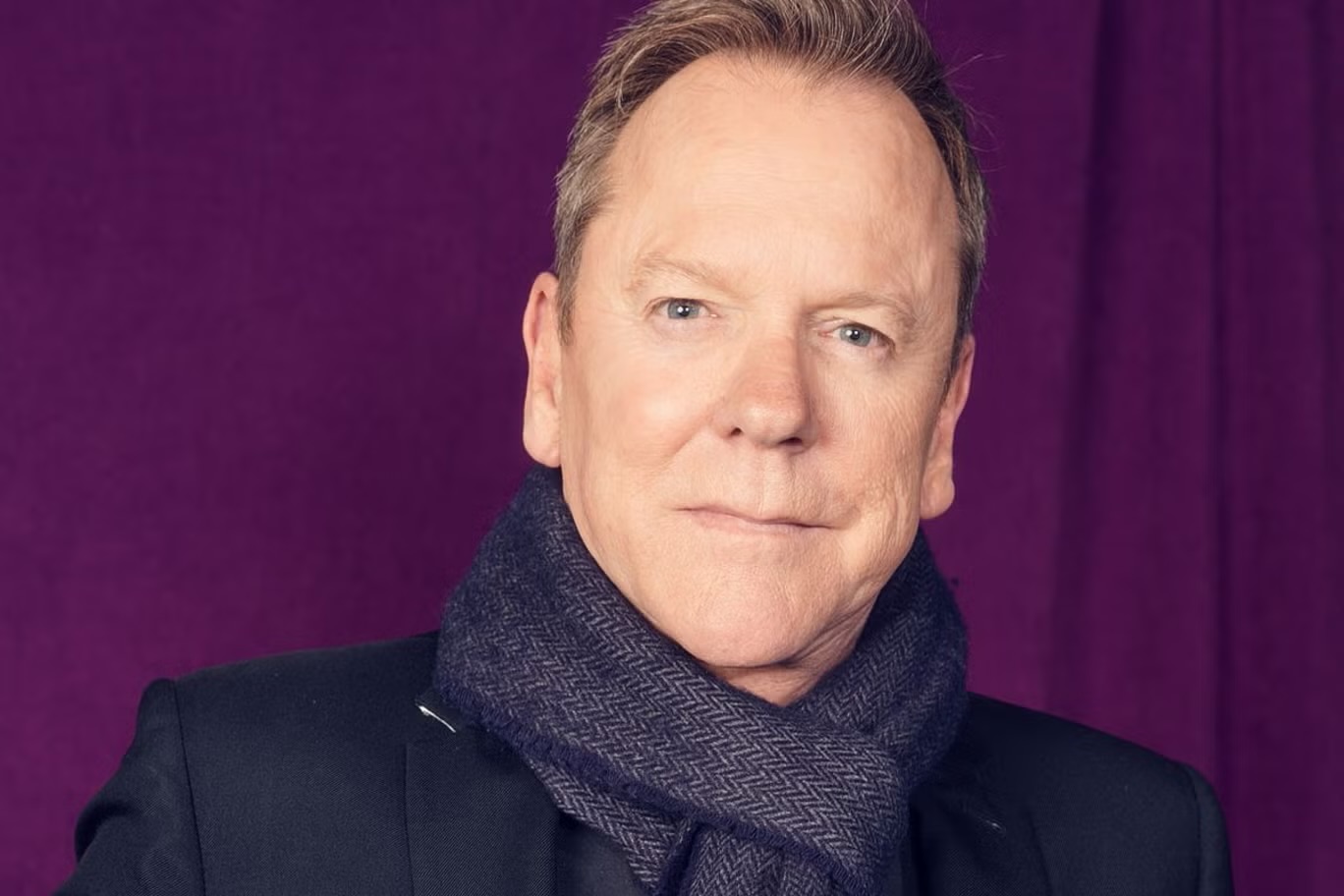
Approaching 60, Kiefer Sutherland says he is increasingly aware that age brings a loss of relevance, a fear he has channelled into some of his strongest recent work. He explored that sense of marginalisation in what he considers a career defining role in 2023, portraying a sidelined naval commander in William Friedkin’s final film, The Caine Mutiny Court-Martial. Drawing on personal feelings of redundancy, Sutherland said the role forced him to confront empathy, both for the character and himself.
He now stars in Tinsel Town, a British Christmas comedy in which he plays a self absorbed Hollywood action star forced into a Yorkshire pantomime. The role leans heavily into self parody, but Sutherland says the emotional core, a fractured relationship with a daughter, resonated personally. He credits British cinema with excelling at grounded, small town stories and says his lifelong attachment to the UK remains strong, shaped by his London birth and the support he has always felt from British audiences.

Sutherland also credits the UK with saving 24, revealing the series took far longer to gain traction in the US but became an immediate hit in Britain. Without that early success, he believes the show may not have survived beyond its first season. The series ultimately ran for nine seasons and defined his career, even as it locked him into a demanding production cycle.
Reflecting on his career path, Sutherland contrasts his choices with those of his late father, Donald Sutherland, whose rise coincided with what he calls the greatest era of film writing in American history. Sutherland says early parenthood and financial responsibility forced him to prioritise stability over artistic planning, leading to missed opportunities he still regrets.
After 24 ended, he admits he wrongly assumed work would automatically follow. Instead, he learned that without deliberate planning, opportunities disappear. Despite that, he rebuilt momentum through projects like Melancholia and Designated Survivor.
Sutherland is sharply critical of modern television, arguing that short eight episode seasons prevent audiences from forming lasting attachments. He believes viewers miss the reliability of long running shows like ER, NYPD Blue and 24, and says streaming platforms have recreated traditional television while charging audiences for what was once free, often adding advertisements on top.
Despite his concerns about aging and relevance, Sutherland remains one of the few actors with a permanent imprint on television history. Whether audiences care less than they once did, he continues to speak with the authority of someone who helped define the medium.
on Age, Legacy and Why Modern Television Is Broken
Approaching 60, Kiefer Sutherland says he is increasingly aware that age brings a loss of relevance, a fear he has channelled into some of his strongest recent work. He explored that sense of marginalisation in what he considers a career defining role in 2023, portraying a sidelined naval commander in William Friedkin’s final film, The Caine Mutiny Court-Martial. Drawing on personal feelings of redundancy, Sutherland said the role forced him to confront empathy, both for the character and himself.
He now stars in Tinsel Town, a British Christmas comedy in which he plays a self absorbed Hollywood action star forced into a Yorkshire pantomime. The role leans heavily into self parody, but Sutherland says the emotional core, a fractured relationship with a daughter, resonated personally. He credits British cinema with excelling at grounded, small town stories and says his lifelong attachment to the UK remains strong, shaped by his London birth and the support he has always felt from British audiences.
Sutherland also credits the UK with saving 24, revealing the series took far longer to gain traction in the US but became an immediate hit in Britain. Without that early success, he believes the show may not have survived beyond its first season. The series ultimately ran for nine seasons and defined his career, even as it locked him into a demanding production cycle.
Reflecting on his career path, Sutherland contrasts his choices with those of his late father, Donald Sutherland, whose rise coincided with what he calls the greatest era of film writing in American history. Sutherland says early parenthood and financial responsibility forced him to prioritise stability over artistic planning, leading to missed opportunities he still regrets.
After 24 ended, he admits he wrongly assumed work would automatically follow. Instead, he learned that without deliberate planning, opportunities disappear. Despite that, he rebuilt momentum through projects like Melancholia and Designated Survivor.
Sutherland is sharply critical of modern television, arguing that short eight episode seasons prevent audiences from forming lasting attachments. He believes viewers miss the reliability of long running shows like ER, NYPD Blue and 24, and says streaming platforms have recreated traditional television while charging audiences for what was once free, often adding advertisements on top.
Despite his concerns about aging and relevance, Sutherland remains one of the few actors with a permanent imprint on television history. Whether audiences care less than they once did, he continues to speak with the authority of someone who helped define the medium.