




At least 132 people have been killed and hundreds injured after a powerful 7.4-magnitude earthquake struck western Colombia, prompting authorities to declare a national disaster as rescue teams search collapsed buildings for survivors.
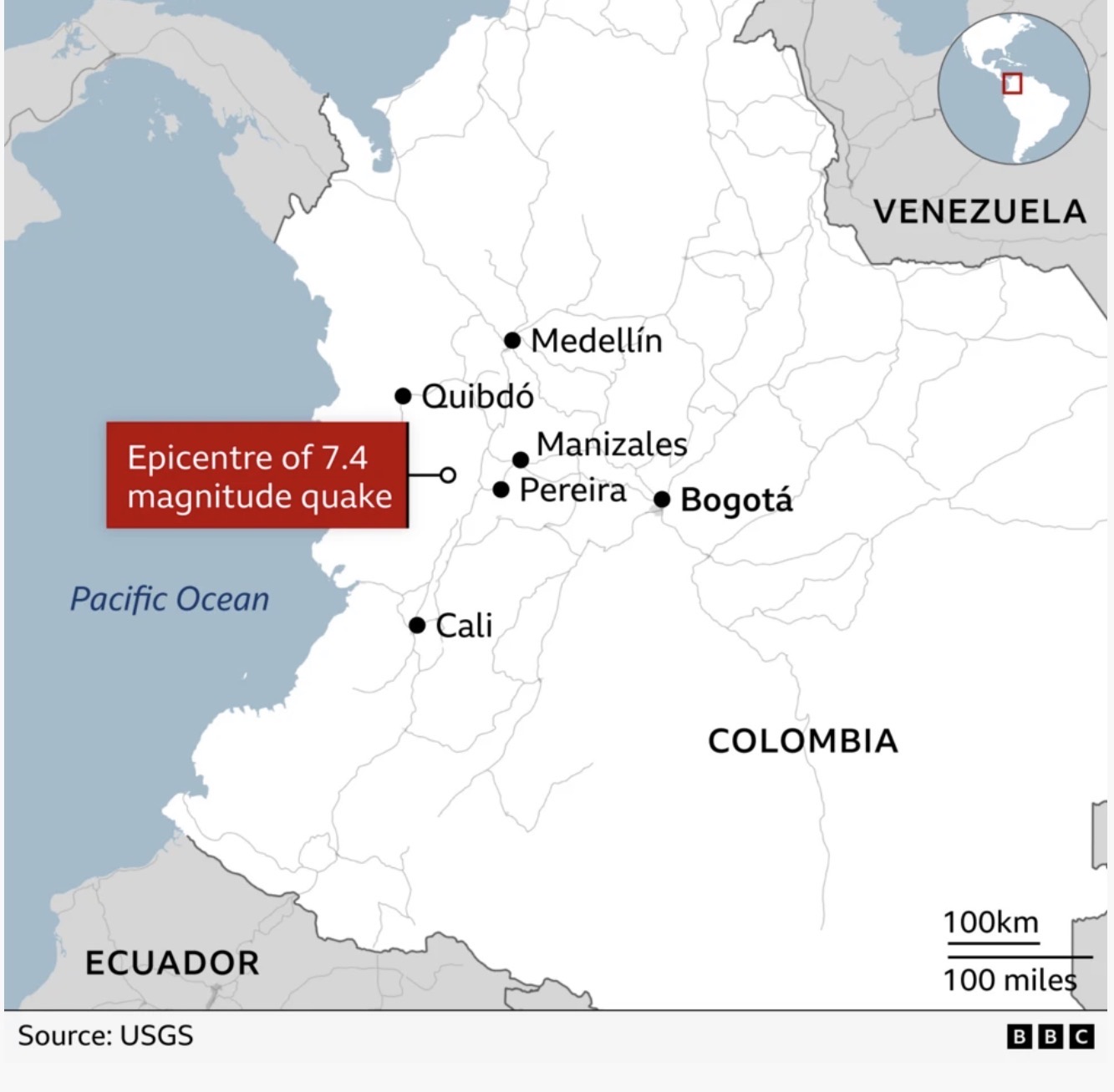
The earthquake struck at 07:34 local time at a depth of approximately 103km, with its epicentre near San José del Palmar in Chocó province, according to Colombia’s geological authorities.
More than 480 people have been reported injured, while over 1,500 homes have sustained damage. Authorities have warned that the death toll could increase as people remain trapped beneath collapsed structures.
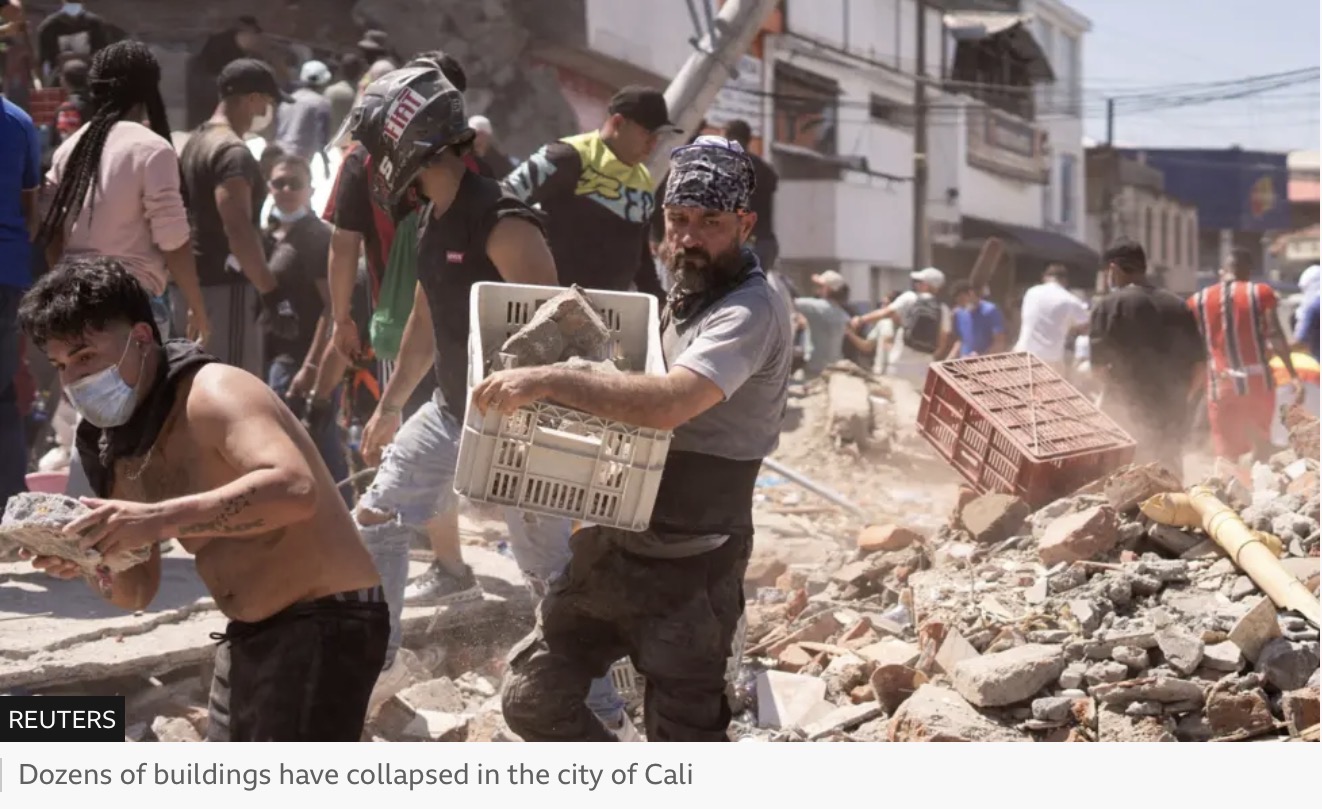
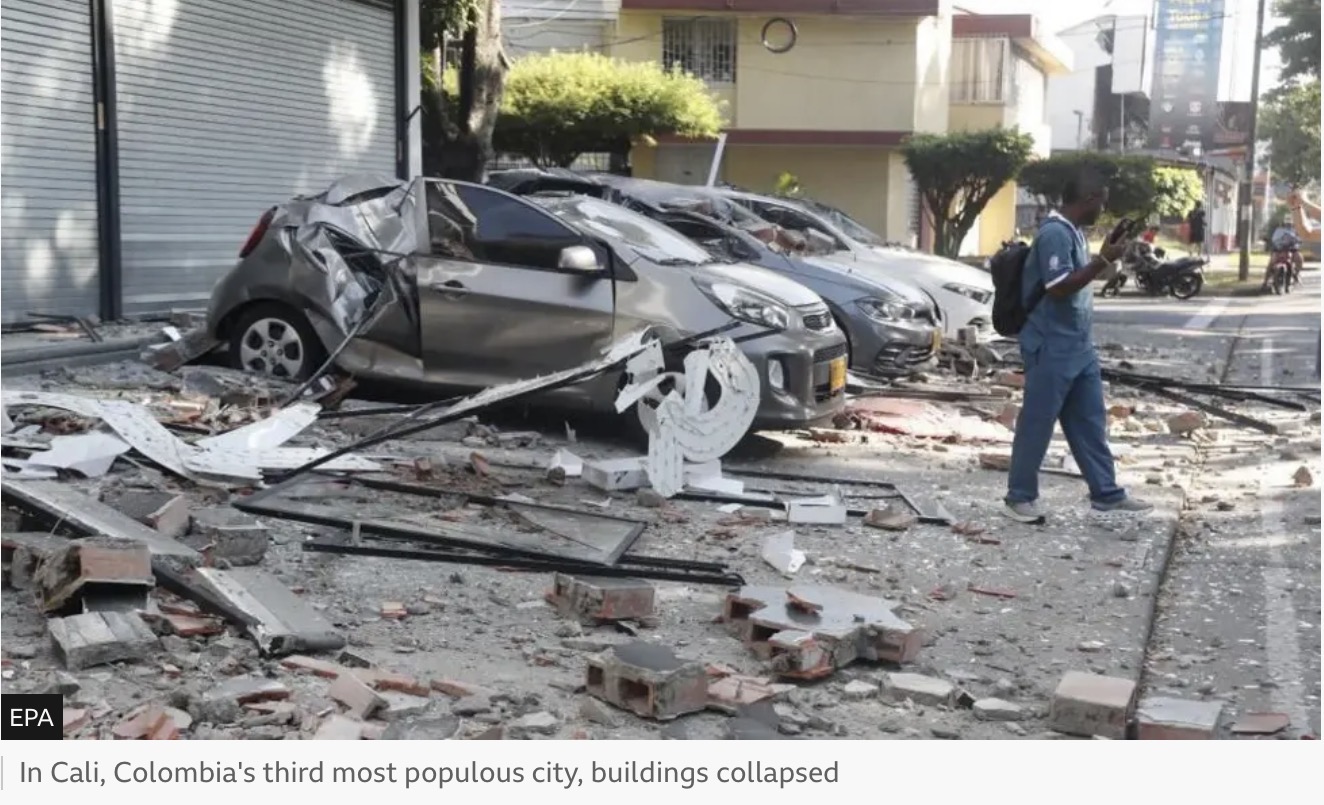
The city of Pereira, around 55km from the epicentre, has suffered some of the most severe destruction. At least 40 people have been confirmed dead across its metropolitan area.
Authorities said 65 buildings collapsed in Pereira, with people believed to remain trapped inside at least 15 of them. A curfew has been imposed in parts of the city as emergency operations continue.
Cali was also badly affected, with 32 buildings reported to have collapsed. Deaths and significant damage have additionally been reported in Manizales, Quibdó, Medellín and across the Chocó and Valle del Cauca regions.
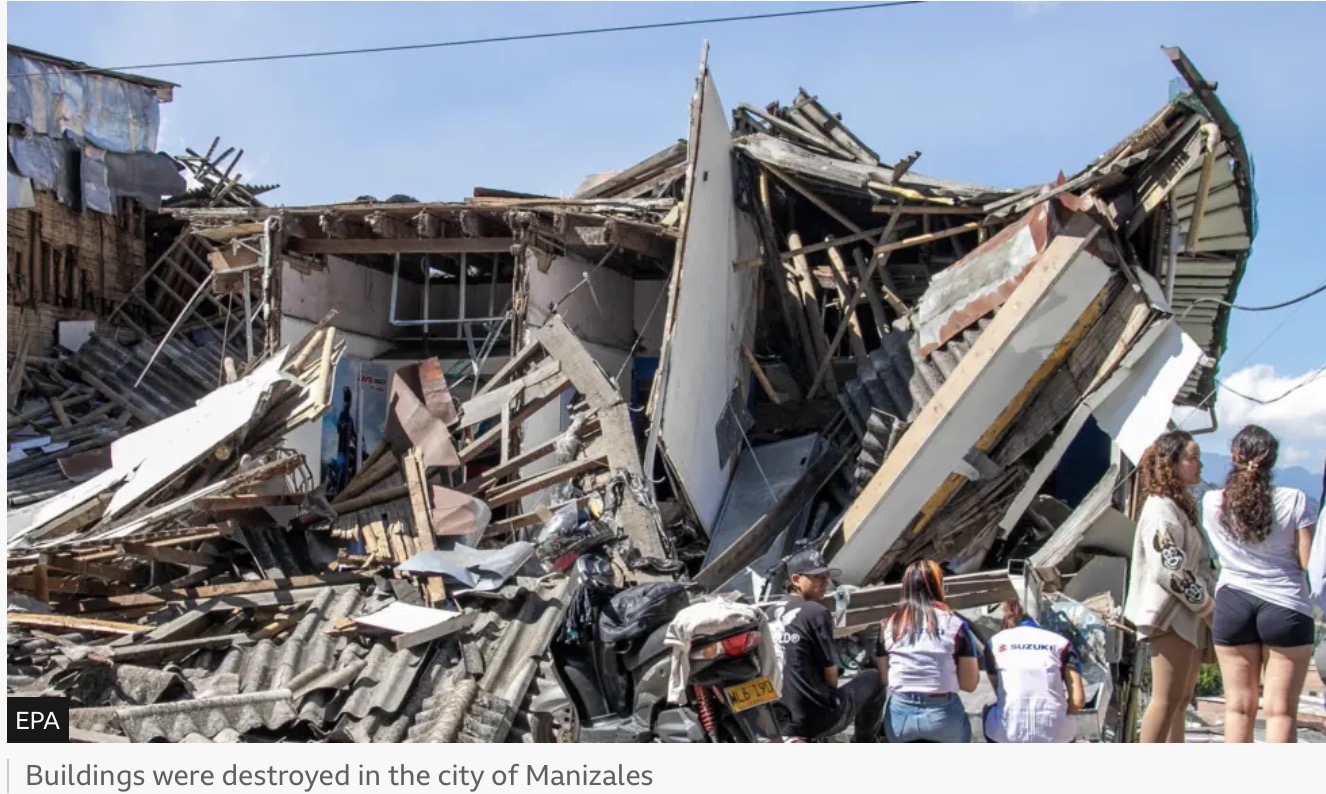
Witnesses described terrifying scenes as buildings shook, walls cracked and debris fell into streets.
Dan Cutler, a British traveller staying in Cali, said he and his partner were awakened by the earthquake and ran outside in their pyjamas.
“I’ve never experienced anything like it,” he said, adding that their hotel suffered cracks and falling plaster but no major structural damage.
In Manizales, Angélica Ávila said people screamed as cracks appeared in the walls of her hotel and bricks began falling from nearby buildings.
The earthquake was powerful enough to be felt hundreds of kilometres away, including in the Colombian capital Bogotá and neighbouring Venezuela, Ecuador and Panama.
Several regional airports, including those serving Pereira, Manizales, Quibdó, Armenia, Cartago and Buenaventura, have also reported damage.
Colombian President Abelardo de la Espriella declared a national disaster, giving the government emergency powers including the ability to redirect public funds toward rescue, recovery and reconstruction efforts.
The disaster represents an immediate major crisis for the new president, who took office only days before the earthquake struck.
International assistance has also been offered. U.S. Secretary of State Marco Rubio said Washington was closely monitoring developments and was prepared to provide support, while European Commission President Ursula von der Leyen said the EU’s Copernicus satellite system was being used to assist rescue operations.
El Salvador’s President Nayib Bukele also offered rescue personnel and equipment.
The U.S. Geological Survey estimated that approximately 1.5 million people experienced shaking approaching magnitude seven.
Although deep earthquakes such as this one are generally considered less destructive than shallow earthquakes of comparable magnitude, they can transmit seismic energy across a much wider area and still cause severe structural damage.
Search-and-rescue operations are continuing across the worst-hit areas as authorities attempt to reach people believed to remain trapped beneath the rubble.
Discover more from Niyi Daram
Subscribe to get the latest posts sent to your email.
