




Spain has deployed troops to its North African enclave of Ceuta after an unprecedented surge in migrant crossings from Morocco, with officials estimating that around 49,000 people entered the territory by land and sea within 24 hours.
The mass influx has overwhelmed local authorities and prompted Madrid to reinforce security in both Ceuta and the nearby Spanish enclave of Melilla, where several hundred additional crossings were also reported overnight.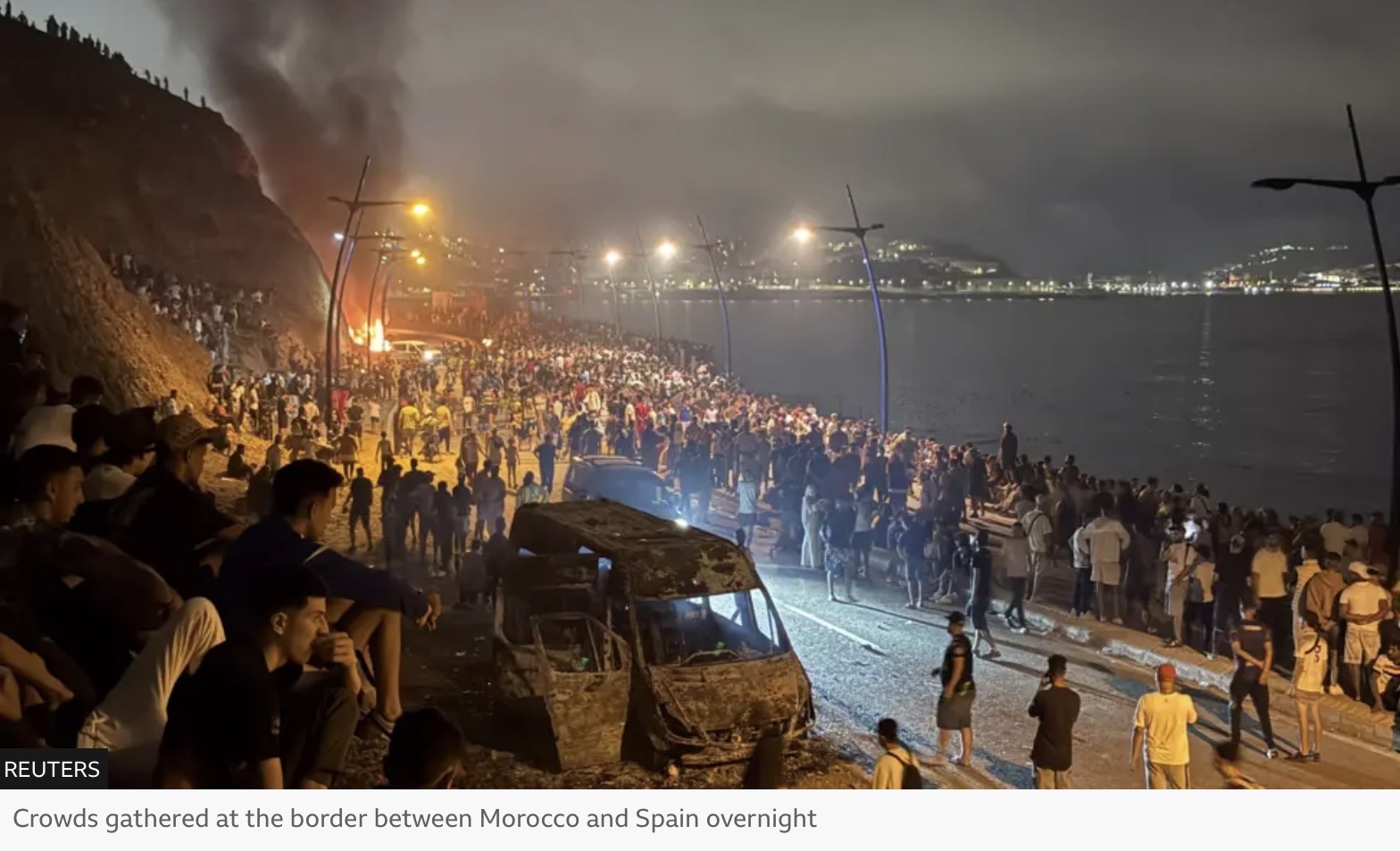
Ceuta, which has a population of about 83,600, is one of Spain’s two territories on the North African coast and forms part of the European Union’s only land border with Africa.
Videos and photographs from the area showed thousands of migrants swimming around border barriers or crossing into the enclave on foot. Many of those arriving were young men, although families, women, children and infants were also among the crowds.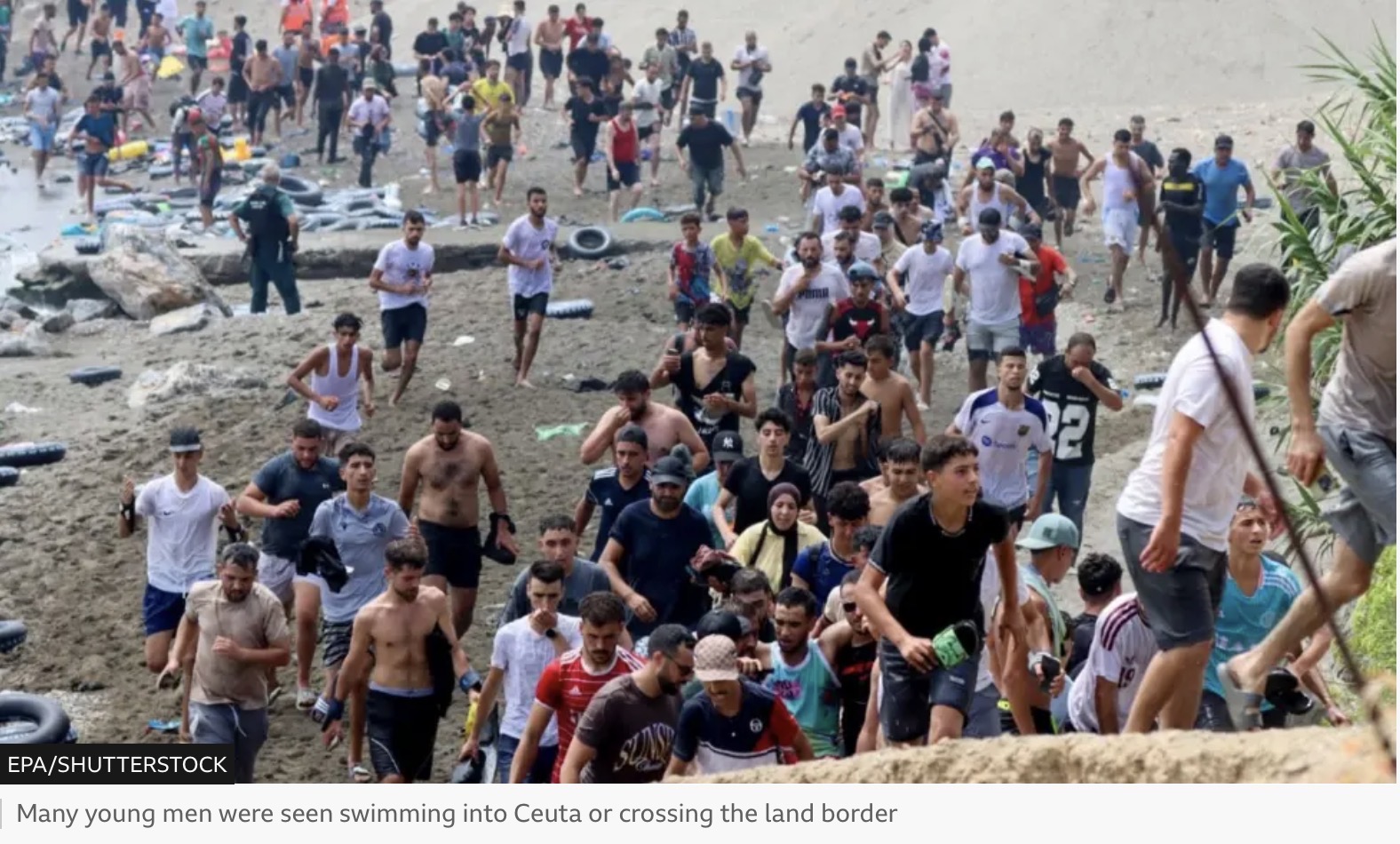

Spanish officials estimate that approximately 7,000 of those who entered Ceuta during the latest surge are unaccompanied or accompanied minors.
Authorities also said at least 18 people have died in recent days while attempting the dangerous journey to the enclave.
The surge follows a recent ruling by Supreme Court of Spain that migrants intercepted at sea while attempting to reach Ceuta or Melilla cannot be immediately returned to Morocco.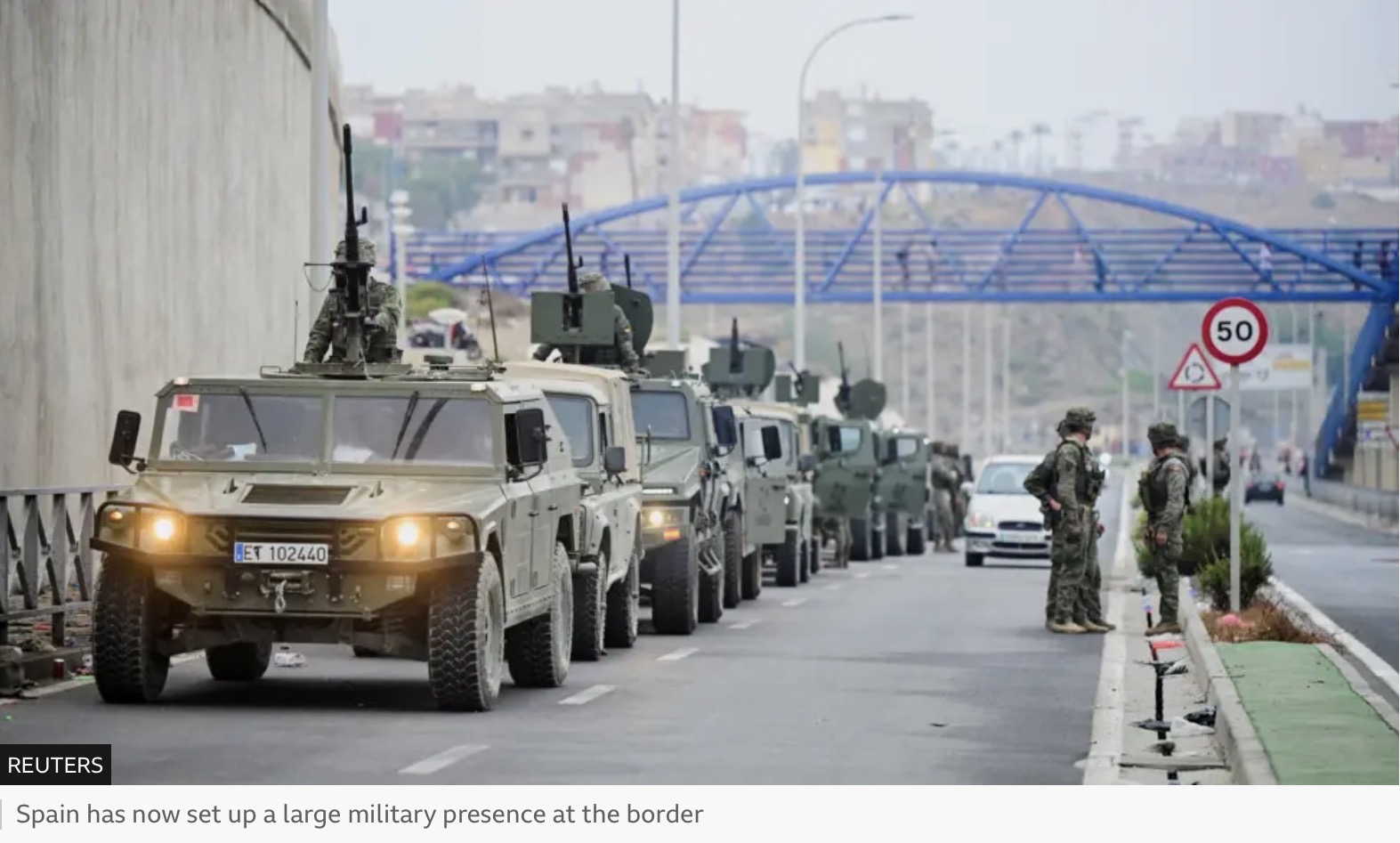
Local officials had already appealed to the Spanish government for additional support after a sharp rise in attempted crossings, but border controls appeared to come under severe strain as thousands of people arrived over a short period.
Spain’s Interior Ministry said it is working with Moroccan authorities to return those who entered illegally “as soon as possible.”
Prime Minister Pedro Sánchez is expected to visit Ceuta as the government responds to the crisis.
The latest influx has drawn comparisons with the 2021 migration crisis, when around 8,000 people crossed into Ceuta after diplomatic tensions between Spain and Morocco over the disputed territory of Western Sahara.
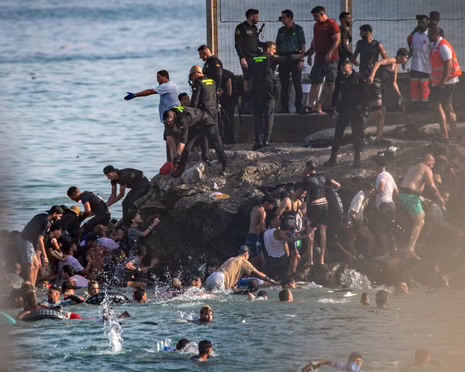 Officials have not yet confirmed what triggered the latest mass movement or why Moroccan border controls appeared unable to prevent such a large number of crossings.
The developments have also sparked political reactions across Europe. Italian Prime Minister Giorgia Meloni described the scenes as “shocking” and warned that uncontrolled migration posed a security challenge for Europe.
Her comments drew criticism from Spain, with Foreign Minister José Manuel Albares accusing Italian officials of politicising the issue and calling for European solidarity rather than partisan rhetoric.
Despite entering Spanish territory, migrants who reach Ceuta cannot freely travel to mainland Spain and remain subject to immigration procedures while authorities determine their legal status and possible return to Morocco.
