



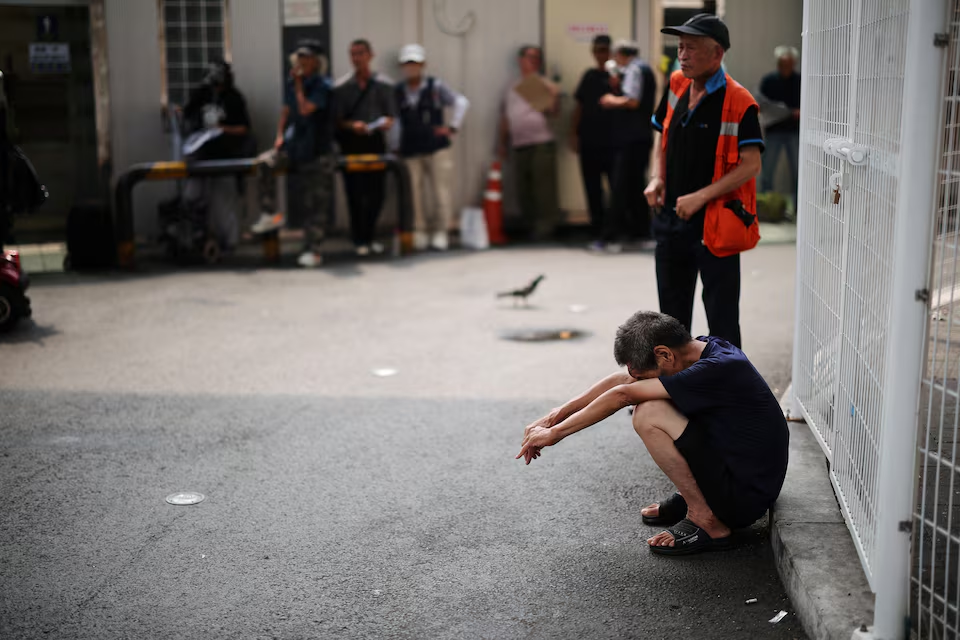
South Korean President Lee Jae Myung has called the country’s record-breaking heatwave a national disaster and ordered authorities to strengthen emergency measures as extreme temperatures continue to grip the nation.
Speaking at a cabinet meeting on Tuesday, Lee instructed government agencies to expand support for those affected, protect vulnerable residents, and inspect electricity infrastructure as demand for air conditioning reaches exceptionally high levels.
“An even greater concern is that abnormal weather conditions make it highly likely that extreme weather will continue for a considerable period,” Lee said, adding that South Korea needs a major overhaul of its disaster response system to better cope with increasingly hazardous weather conditions.
According to South Korean health authorities, the ongoing heatwave has been linked to 19 deaths, with 13 of the victims aged 80 or older. Since May 15, more than 2,000 people have suffered heat-related illnesses nationwide.
The Korea Meteorological Administration reported that the southeastern city of Yangsan recorded a temperature of 42.5°C (108.5°F) on Sunday, the highest temperature measured in the country’s 122 years of modern weather observations.
The agency also issued its first-ever heatwave warning for parts of Seoul and neighbouring Gyeonggi Province on Monday before expanding the warning to cover the entire capital on Tuesday.
Under a heatwave alert, residents are advised to suspend outdoor activities such as farming, construction work and sports because of the heightened risk of heat-related illness.
In western Seoul’s Yeongdeungpo district, where many low-income residents live in small single-room housing known as jjokbang, some people have been relocated to temporary government accommodation equipped with air conditioning.
Residents described the conditions as unprecedented.
“I have never felt heat like this so far here,” said local resident Cho Sang-yeon, while another resident, Son Ki-young, expressed concern for homeless people still exposed to the extreme temperatures.
Local emergency services have been spraying water on roads, checking vulnerable residents for signs of heat-related illness and increasing patrols in affected neighbourhoods.
The extreme weather has also disrupted sporting events, with the Korea Baseball Organization cancelling two professional baseball games scheduled for Tuesday in Seoul and Gwangju because of the dangerous conditions.
Discover more from Niyi Daram
Subscribe to get the latest posts sent to your email.
