



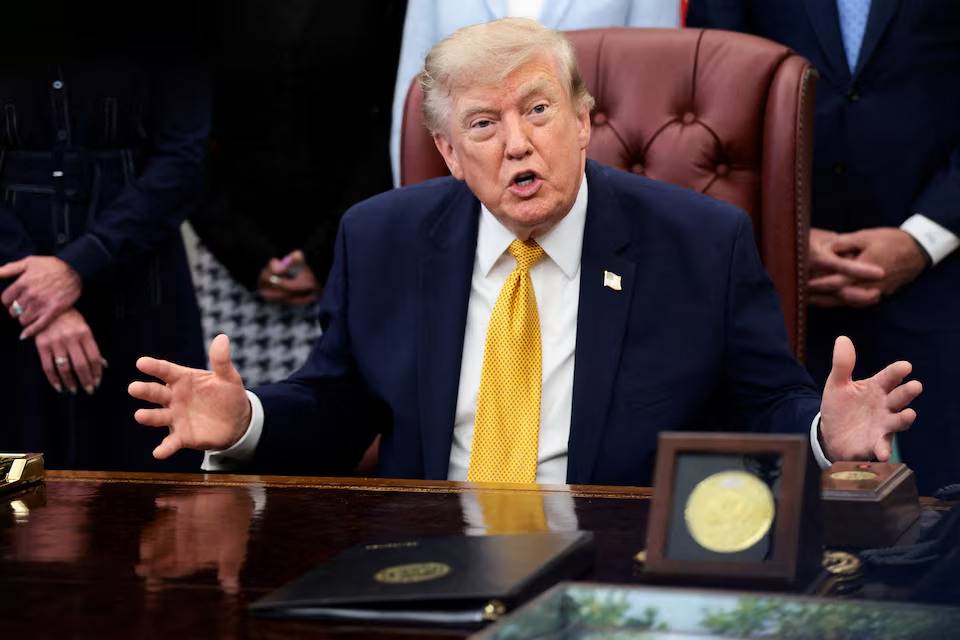
A Reuters review of federal court records has found that judges have ruled against the Trump administration on First Amendment grounds in 75 out of 93 civil cases decided during President Donald Trump’s second term, marking an unusually high level of judicial scrutiny over constitutional free speech, press and religious freedom issues.
According to the review, the rulings concluded that various administration actions violated protections guaranteed under the First Amendment, including freedom of speech, freedom of religion and freedom of the press.
Among the cases identified were decisions finding that the administration unlawfully retaliated against individuals and organizations because of their political views, restricted media access, targeted law firms over their legal advocacy, reduced funding to universities, and used excessive force during protests.
In one of the rulings, U.S. District Judge William Young, a Republican appointee nominated by President Ronald Reagan, wrote that the administration’s actions posed “a great threat to Americans’ freedom of speech.”
Judge Young ruled that foreign students and faculty members who had engaged in pro-Palestinian advocacy had been unlawfully detained, deported or stripped of their visas because of their protected speech.
Reuters found that judges appointed by Democratic presidents issued most of the adverse rulings, although judges appointed by Republican presidents also ruled against the administration in 10 cases.
The review contrasted the findings with litigation during President Joe Biden’s administration. Reuters identified 27 lower-court cases involving First Amendment challenges during Biden’s presidency, with judges ruling against his administration in 13 of them. Many of those cases involved challenges to COVID-19 vaccine mandates on religious freedom grounds.
The Trump administration has appealed approximately two-thirds of the rulings that went against it.
In 15 of those appeals, higher courts either suspended the lower-court decisions or overturned them entirely.
Among the administration’s appellate victories were rulings involving Columbia University activists Mahmoud Khalil and Mohsen Mahdawi. Appeals courts concluded that the lower courts lacked jurisdiction to hear those cases without deciding the underlying First Amendment claims.
Another successful appeal came before the Ninth Circuit Court of Appeals, which overturned a ruling that had prevented the administration from restricting collective bargaining rights for hundreds of thousands of federal employees. The appeals court held that the administration would have taken the same action regardless of any alleged retaliatory motive.
Other appellate courts have upheld lower-court findings against the administration. In May, the Ninth Circuit agreed with a district court that terminating certain federal research grants awarded to University of California researchers as part of the administration’s anti-diversity, equity and inclusion initiatives amounted to unconstitutional viewpoint discrimination.
The White House rejected Reuters’ findings, with spokeswoman Abigail Jackson criticizing what she described as activist judges interfering with the president’s constitutional authority and arguing that the judiciary had obstructed the policy choices endorsed by American voters.
President Trump campaigned on promises to protect free expression and signed an executive order on his first day back in office titled Restoring Freedom of Speech and Ending Federal Censorship. The order directed federal agencies not to violate constitutional speech protections.
Critics argue that subsequent executive orders and policy decisions targeting diversity programmes, gender identity initiatives, universities, media organisations and certain legal firms have conflicted with that pledge, leading to the wave of constitutional challenges.
Legal scholars cited by Reuters described the number and scope of First Amendment rulings as historically significant, although many of the cases remain ongoing and several key issues are expected to be resolved by federal appeals courts and potentially the U.S. Supreme Court.
Discover more from Niyi Daram
Subscribe to get the latest posts sent to your email.
